Modernizing Healthcare with AI: How RADPAIR and Fireworks Unlock Smarter Radiology Workflows
Executive Summary
RADPAIR is transforming radiology workflows with its intent to create an open-source SDK standard – anchored by the Report Document Schema (RDS) and Actions and Event Protocol (AEP) – which enables safe, intelligent AI interactions across reporting systems. RADPAIR’s SDK establishes a new AI orchestration standard for healthcare, designed for adoption by coalition partners to enable interoperable, safe, multi-agent workflows across institutions. Fireworks AI provides the enterprise-grade infrastructure and orchestration platform for RADPAIR’s fine-tuned models and multi-agent pipelines, ensuring real-time, scalable, and compliant performance.
Today, radiologists at institutions including Radiology Partners, which handles 40-50 million cases annually, benefit from AI-assisted workflows that integrate real-time dictation and generative AI structured reporting, reducing cognitive load, accelerating throughput, and improving diagnostic confidence. Key performance gains observed in production include:
Report turnaround: Reduced from 15-20 seconds → 2-5 seconds, meeting clinical Service Level Agreement (SLA) requirements
Workflow efficiency: Early data suggests ~25% reduction in time per case, thanks to auto-populated fields, smart suggestions, and reduced context switching
Reporting accuracy: Pilot studies and independent research indicate 12% fewer reporting errors (Radiology Business).
Scalability: Supports 1,000+ concurrent users, with sub-second Speech-to-Text (STT) latency and near real-time display of intermediate transcripts (<200ms).
By combining RADPAIR’s innovative AI orchestration with Fireworks’ scalable, low-latency infrastructure, the partnership unlocks clinically meaningful impact: radiologists focus on interpretation and patient care, patients receive faster, more accurate diagnoses, and hospitals gain auditable, compliant workflows without building their own AI infrastructure.
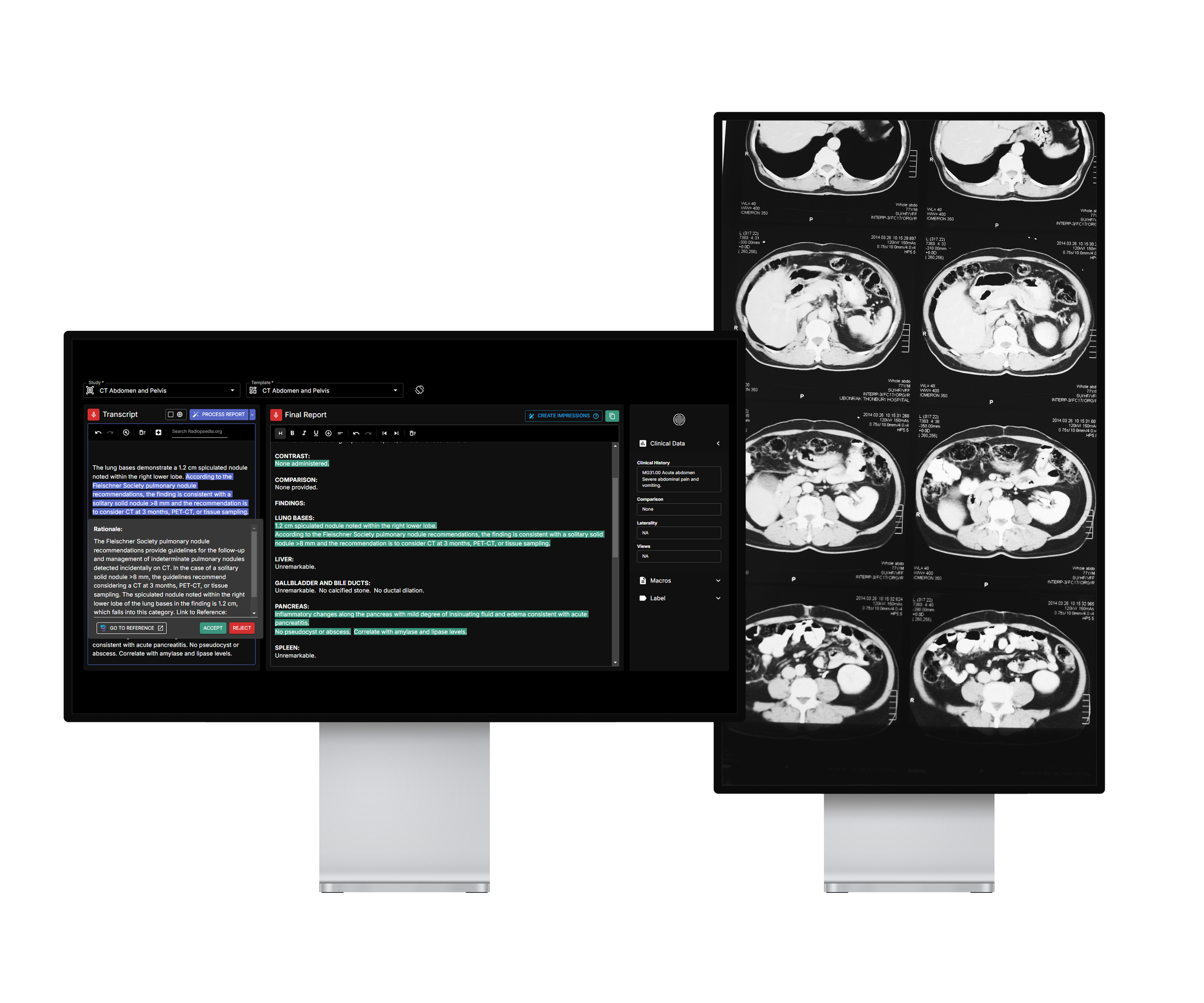
RADPAIR Radiology Transcription
Key Outcomes at a Glance

OutcomeBeforeAfter / TargetReport Turnaround15-20 seconds2-5 seconds (meeting SLA)Workflow EfficiencyHigh cognitive load, multiple context switches~25 faster per case, auto-populated structured reportsReporting AccuracyFrequent transcription errors, hallucinations~12% fewer errors, reliable dictation captureScale & ConcurrencyLimited by infrastructureSupports 1,000+ simultaneous microphones, 100-200 reports/day per physician, sub-second STT latency, multi-model orchestration scalable to billions of tokens/monthAudit & ComplianceFragmented reporting, siloed dataStructured, auditable workflows; RDS/AEP enable interoperabilityAI Model PerformanceGeneric transcription, reasoning modelsSupports RADPAIR’s fine-tuned Whisper STT model, hosted and orchestrated in real-time via Fireworks infrastructure. Trained on radiology audio, ensures accurate capture of specialized terminology; downstream reasoning and multi-step orchestration are handled by RADPAIR.
RADPAIR’s Mission: Smarter, Safer Radiology Workflows
Radiology departments are critical to modern healthcare, yet reporting workflows remain slow, fragmented, and cognitively taxing. Radiologists switch between multiple screens, dictate findings line by line, and manually retrieve prior measurements or reports. Studies indicate that radiologists spend approximately 36% - 54% of their time on image interpretation, with the rest on administrative tasks (JACR, 2023). This imbalance not only reduces productivity, but also contributes to burnout and can affect patient outcomes.
Founded by practicing radiologist Avez Rizvi, RADPAIR aims to redesign radiology workflows. Today, RADPAIR represents 13-14% of the U.S. radiology reporting market, including its largest client, Radiology Partners, supporting 4,000 physicians across 40-50 million cases annually. Their mission is to enable next-generation, agentic AI workflows that orchestrate multiple AI agents from dictation to reasoning to system control so radiologists can prioritize patient care and high-value interpretations.
The Challenge: Fragmented Workflows and Antiquated Standards
Traditional radiology workflows are fragmented and cumbersome:
Imaging → Switch screens → Report software → Dictate findings line by line → Manually retrieve prior reports → Compile measurements → Submit report
Key pain points:
Cognitive overload: Multiple context switches slow work and increase fatigue
Siloed data streams: Difficult to incorporate prior studies, measurements, or external information, increasing risk of errors
Outdated standards: Legacy HL7 limits integration with modern AI
AI adoption challenges: Existing tools cannot reliably orchestrate tasks across systems
Administrative burden: Limits focus on patient care
STT-Specific Bottlenecks and Multi-Agent Requirements
Scaling AI-assisted transcription is particularly challenging, with constraints that impact physician adoption and workflow trust:
Speed & Perceived Responsiveness: Early cloud-based STT systems were slower and less accurate than on-premise tools like legacy systems, frustrating radiologists.
Domain-Specific Terminology: Radiologists often use shorthand, incomplete phrases, or specialized terms (“AAA” for abdominal aortic aneurysm, “tib-fib” for tibia/fibula). Off-the-shelf transcription models often struggle to capture these nuances accurately, which undermines both trust and clinical precision. At the same time, overly specialized speech engines tuned only for medical or radiology lexicons limit natural, conversational input—preventing users from fully unlocking agentic AI workflows.
Multi-Agent Orchestration: Real workflows require simultaneous execution of multiple models - transcription, reasoning, report auto-population, viewer control, and voice feedback - all in a streaming, real-time context to be ready for upcoming agentic AI workflows.
Clinical Impact & Scalability: Inaccuracies in critical terminology can lead to misreporting, slowing diagnosis, and increasing risk. RADPAIR needed a solution that supported 1,000+ concurrent microphones, sub-second latency, high accuracy for radiology vocabulary, and auditable, HIPAA-compliant workflows.
Latency: Fine-tuned STT model must operate in a streaming audio context with <200ms display of intermediate transcripts
Cost: Hosting on legacy infrastructure is expensive; a flexible, multi-model hosting platform is needed without compromising quality
Accuracy: Use RADPAIR’s fine-tuned models for the specialized radiology lexicon, validated by practicing radiologists.
“Even if word error rate is low, missing a commonly used medical term can have huge consequences. Cloud latency disrupted dictation and workflow, making real-time AI unusable.”
Dr. Vikram Krishnasetty, Associate CMO at Radiology Partners
“Building agentic AI solutions in radiology is uniquely challenging—especially when orchestrating multiple workflows that span both inside and outside the reporting environment. From controlling external systems to retrieving and synthesizing data across diverse platforms, true orchestration requires seamless collaboration between specialized models.”
Avez Rizvi, CEO and Co-Founder, RADPAIR
These workflow and technical bottlenecks slowed throughput, increased operational costs, and threatened adoption of AI-assisted reporting, impacting the onboarding of new customers. The broader challenge: enabling natural, voice-driven orchestration across multiple AI agents in radiology workflows. And that starts with solving real-time reporting issues that erode physician trust and slowed documentation, creating inefficiencies that were clearly unsustainable for clinical teams.
RADPAIR’s SDK: Enabling Intelligent, Safe AI Workflows
RADPAIR is developing a modern SDK standard with the intent to open-source it that allows AI to act intelligently and safely across workflows:
Report Document Schema (RDS): Converts templates into structured, AI-readable reports
Actions and Event Protocol (AEP): Defines AI tasks like editing reports, controlling viewports, retrieving prior measurements, and updating summaries
Parallel orchestration: Multiple AI-driven tasks happen simultaneously with full audit trails
Open-source release: RDS and AEP available for industry partners to adopt, encouraging interoperability
Here is the AI-enabled workflow (powered by Fireworks):
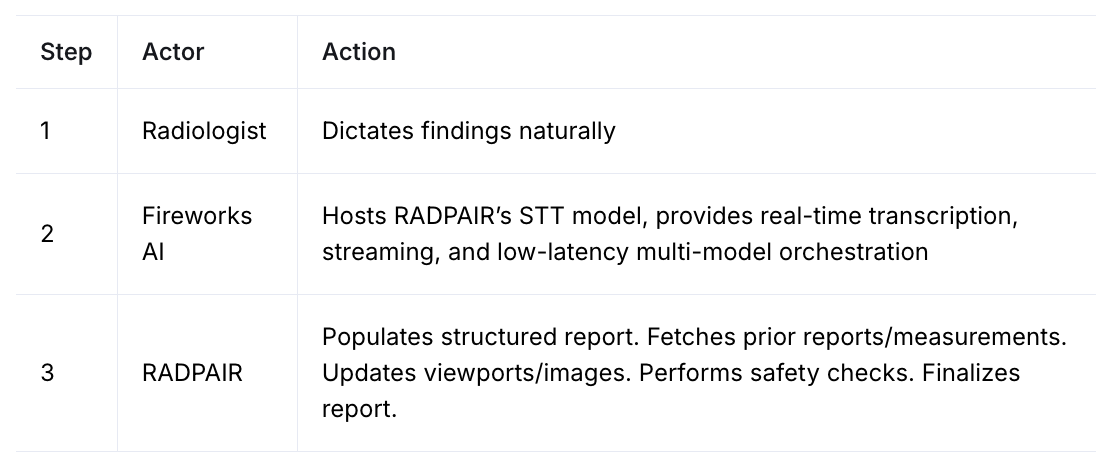
StepActorAction1RadiologistDictates findings naturally2Fireworks AIHosts RADPAIR’s STT model, provides real-time transcription, streaming, and low-latency multi-model orchestration3RADPAIRPopulates structured report. Fetches prior reports/measurements. Updates viewports/images. Performs safety checks. Finalizes report.
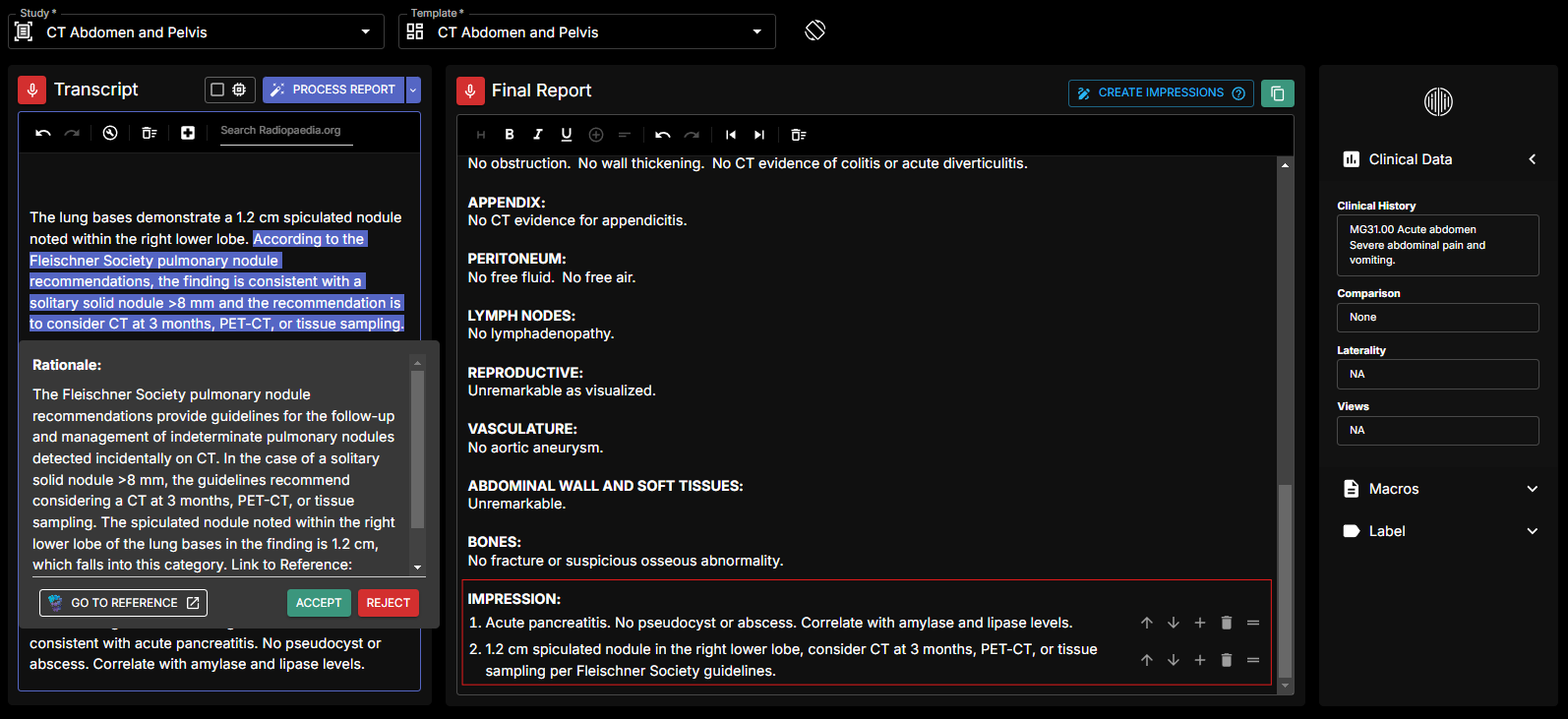
Impressions
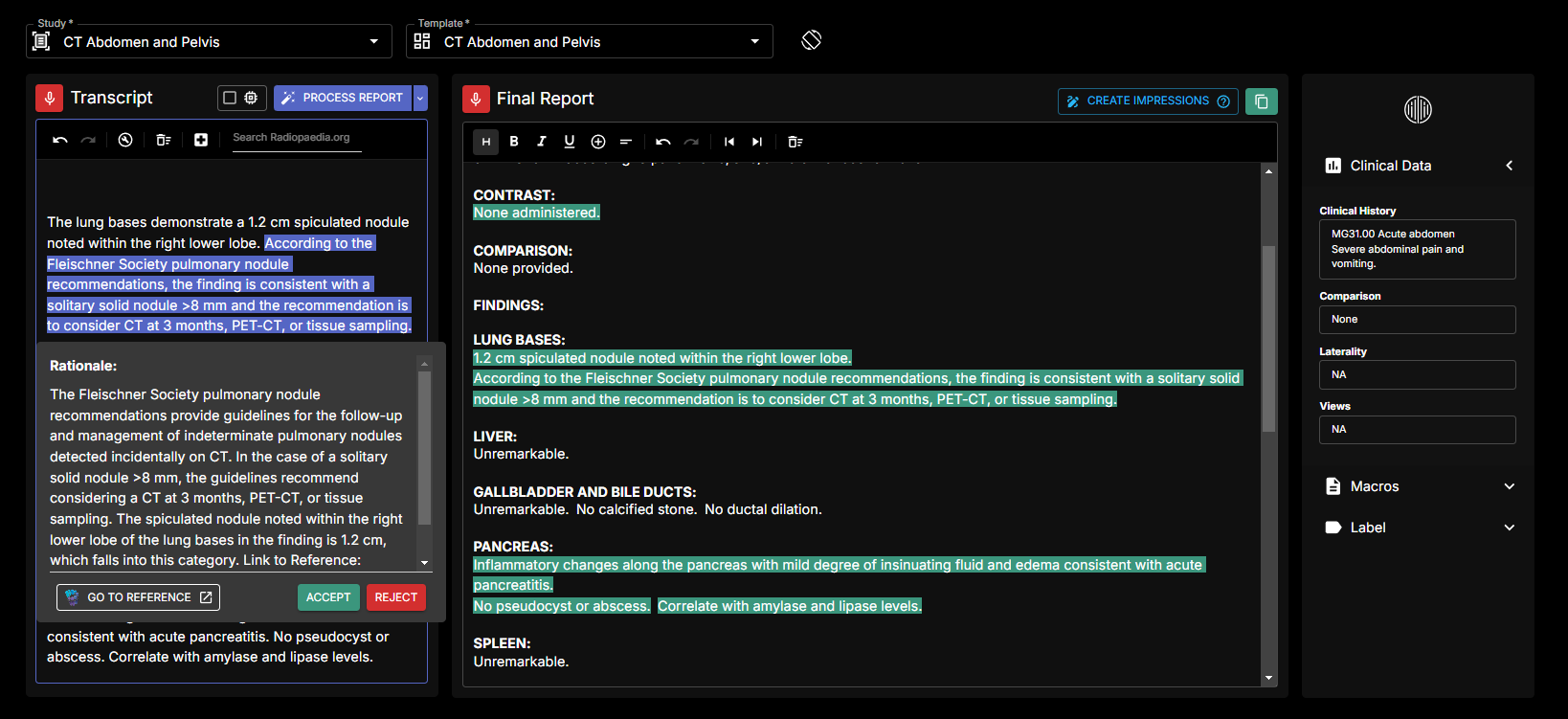
Findings
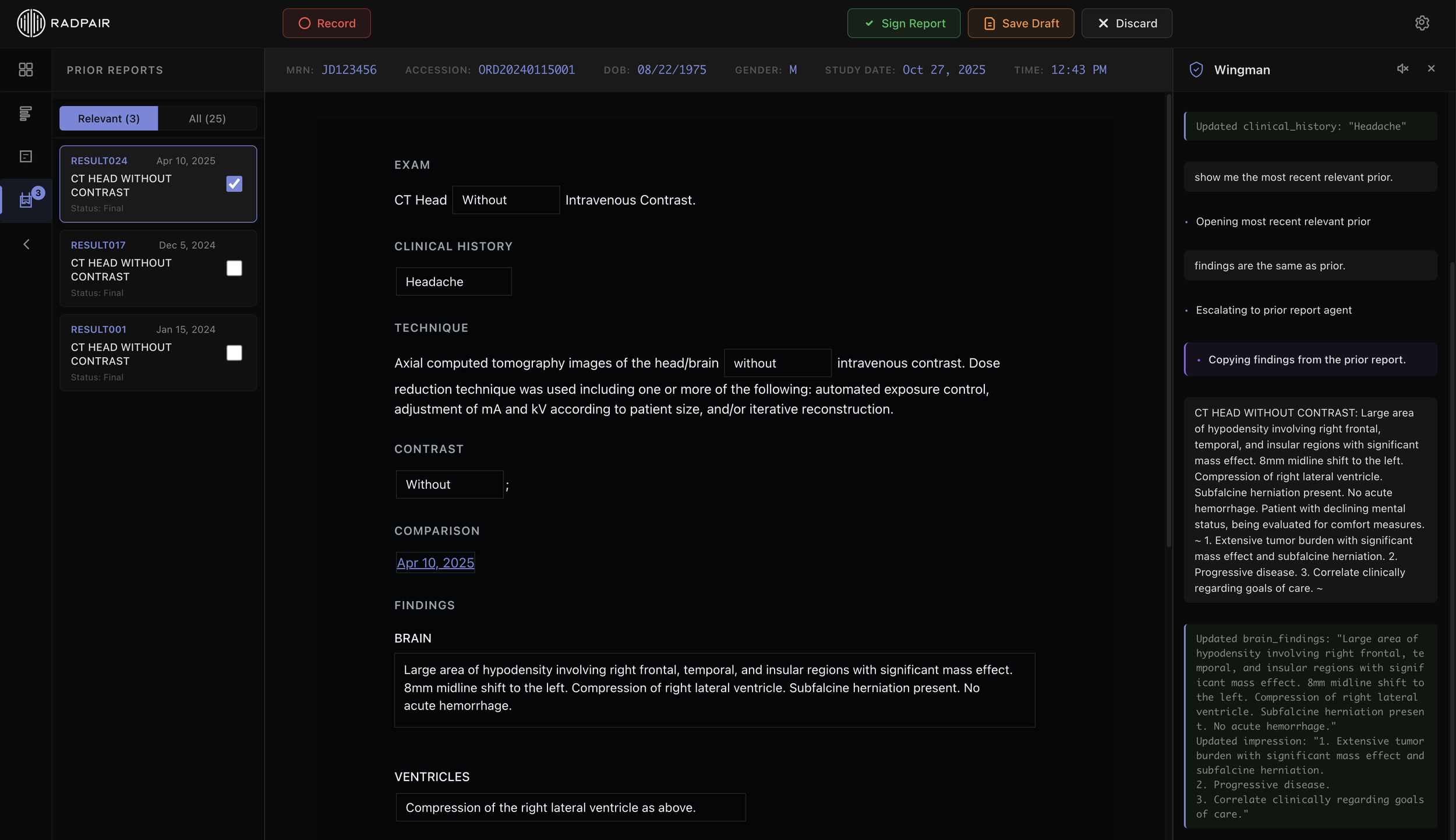
The table below highlights the contributions of Fireworks and RADPAIR within the AI-enabled workflow.
Fireworks AI (Infrastructure & Transcription)RADPAIR (Orchestration & Reporting)Host and serve Radpair’s fine-tuned transcription and reasoning models with high reliabilityDefines RDS/AEP orchestration, structured reporting, and audit rulesProvide scalable streaming infrastructure supporting 1,000+ concurrent usersPopulate structured report fields from transcriptEnable sub-second display of intermediate transcripts (<200ms) by hosting RADPAIR’s STT modelFetch prior reports and measurements automaticallyOptimize hosting and inference for cost-efficient scalingUpdate viewports and images dynamicallyProvides infrastructure foundation to enable RADPAIR’s downstream AI workflowsPerform safety checks, enforce reporting guidelines, and manage multi-agent orchestrationSupport hundreds of reports/day per physician; scalable to billions of tokens/monthEnables smart suggestions, auto-completion, and multi-modal reasoningEnsure reliability, uptime, and performance of hosted modelsEnsure auditability, regulatory compliance, and safe report finalizationMaintain secure, auditable environmentIntegrate structured reports with EMR/PACSEnable low-latency integration with AI-driven workflowsOrchestrate reasoning and downstream model actions in real time
The table below highlights the contributions of Fireworks and RADPAIR within the AI-enabled workflow.
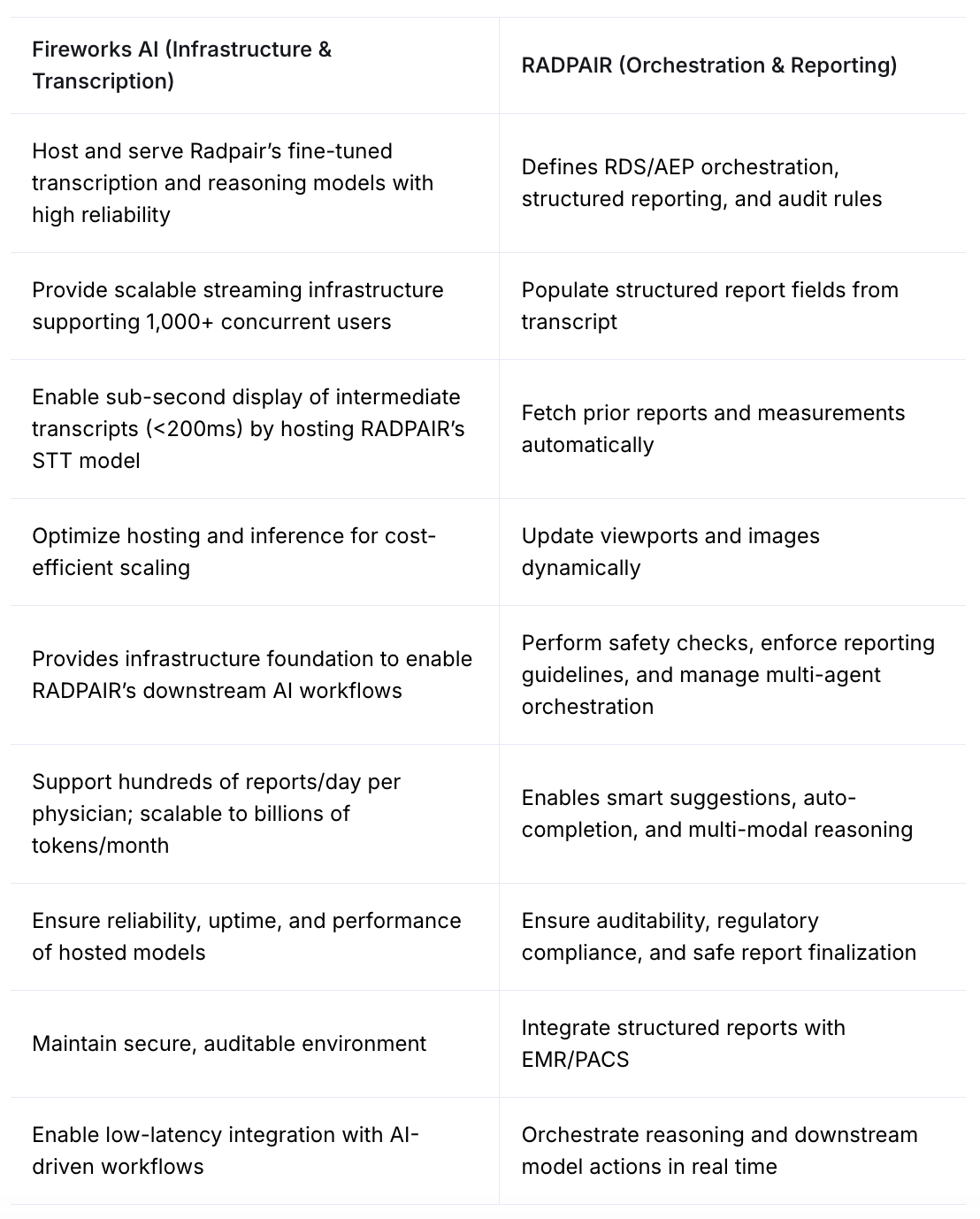
Fireworks AI: Scalable, Low-Latency AI Infrastructure
Fireworks provides the enterprise-grade infrastructure to host and orchestrate multiple AI models concurrently, powering RADPAIR’s next-generation reporting workflows (and thereby addresses RADPAIR’s constraints around scalability, latency, costs, and accuracy with):
Real-time voice transcription (STT): Captures radiologists’ observations via speech instantly using RADPAIR’s proprietary fine-tuned models. Fireworks supports hosting and inference of models, while RADPAIR manages any model fine-tuning on their datasets.
Low-latency inference engine: Sub-second display of intermediate transcription in near real-time (<200ms), meeting or exceeding OpenAI/Gemini baselines. Reports return in 2-5 seconds, maintaining clinical workflow efficiency and SLA compliance.
Scalable streaming infrastructure: Supports 1,000+ concurrent users and hundreds of reports per physician per day, without requiring RADPAIR to build in-house STT infrastructure.
Dynamic load management: Ensures uninterrupted transcription by balancing tasks across models or fallback paths when needed.
Analytics and feedback loop: Collects anonymized usage data to monitor transcription performance and improve models over time, without compromising privacy.
Cost efficiency: Optimized hosting and inference reduce operational costs compared with building and maintaining STT infrastructure internally.
Downstream tasks including populated structured reports, retrieving prior studies, updating viewports and safety checks are orchestrated by RADPAIR, leveraging the transcription Fireworks provides.
Fireworks enables RADPAIR to deploy AI-assisted, multi-agent radiology workflows at scale, letting radiologists focus on interpreting images while patients benefit from faster, more accurate diagnoses.
Before & After: The Transformation to AI-Enabled Radiology Workflows
Before: Fragmented Workflows and Distrust in AI
Imaging → Switch screens → Report software → Dictate findings → Fetch prior reports → Compile measurements → Submit report
Before RADPAIR’s speech engine was optimized, radiologists experienced significant latency between speaking and seeing finalized text appear in the transcript. Cloud-based speech engines often introduced noticeable delays compared to locally installed systems, interrupting dictation flow and breaking concentration. In addition, editing and correcting transcript errors was cumbersome, and cloud-processing artifacts occasionally produced hallucinated or misplaced words—further reducing reliability and trust in real-time reporting.
After: Reliable, Real-time AI Reporting at Scale
Radiologist speaks → [RADPAIR’s hosted STT model on Fireworks] Real-time transcription → [RADPAIR] Populates structured report → [RADPAIR] Retrieves prior reports & measurements → [RADPAIR] Updates viewports → [RADPAIR] Performs safety checks → Finalize report
Radiologists dictate naturally; AI transcribes shorthand and specialized terms in real time, populating structured reports instantly. Physicians focus on interpretation, not troubleshooting technology.
Fireworks provides the infrastructure to host and scale RADPAIR’s fine-tuned STT and other AI models, enabling sub-second, near-real-time transcription and model orchestration (<200ms intermediate display), which supports RADPAIR’s delivery of accurate transcription while preventing missed words, hallucinations, and macro misfires. RADPAIR’s orchestration layer handles multi-tasking, error-checking, and audit logging so radiologists can focus on high-value interpretation rather than troubleshooting technology. The result: faster throughput, higher accuracy, and restored physician trust in AI-assisted reporting.
Impact on physicians and healthcare operations:
Eliminates context switching and transcription errors
Reduces cognitive fatigue as repetitive tasks are automated
Ensures reliable capture of dictation, even for complex macro phrases
Speeds reporting while maintaining clinical accuracy
Improves diagnostic confidence with automatic incorporation of prior reports and measurements
Provides auditable, safe workflows for regulatory compliance
Supports scalable adoption across institutions without custom infrastructure
Human and Clinical Impact:
Physicians can focus on interpreting images and patient care
Patients receive faster, more accurate diagnoses
Organizations gain efficiency, lower operational costs, and higher throughput
“We’re at a point in radiology facing a 35% workforce deficiency nationally. Patients wait longer for reports, and there aren’t enough radiologists. We want to do everything on the tech front to increase capacity, reduce burnout, and enable radiologists to perform at the top of their license. They shouldn’t be secretaries and transcriptionists. Working with RADPAIR— and through their partnership with Fireworks — has been key to pushing this forward. Now, radiologists can dictate naturally and have AI keep up in real time, which is a major leap forward,”
Dr. Vikram Krishnasetty, MD, Associate CMO, Radiology Partners
From Radiology to Healthcare at Scale: Smarter Workflows Powered by AI
RADPAIR’s open-source SDK standard and Fireworks AI infrastructure jointly address a broader industry challenge: fragmented, siloed healthcare workflows stuck on outdated standards. Their unified approach to AI integration delivers benefits at two levels:
Ecosystem-Level Benefits
These capabilities create a thriving ecosystem of interoperable partners, enabling innovation and collaboration across the healthcare industry:
Interoperability: Any compliant AI model can plug into the workflow
Faster innovation: Partners can train models specific to their workflows
Shared ecosystem: Private practices, imaging vendors, and B2B partners adopt a single standard
Scalable improvements in patient care: Faster, more accurate reporting across institutions
Institution-Level Benefits
At the hospital or radiology department level, the partnership drives tangible operational and clinical improvements:
Full control over domain-specific models, including STT and reasoning models fine-tuned for clinical accuracy
Guaranteed real-time performance: Transcription and report generation operate in <200ms latency, ensuring timely and reliable outputs
Low-latency, high-accuracy inference: Meets or surpasses OpenAI/Gemini baselines, critical where errors can have serious consequences
Reduced cognitive load and improved throughput: Radiologists can focus on interpreting images, boosting diagnostic confidence while workflows remain fully auditable
Without this partnership, radiology AI remains fragmented and error-prone. RADPAIR and Fireworks provides a reliable, scalable foundation for safe deployment of fine-tuned AI in healthcare.
Future enhancements extend beyond transcription to LLM-driven reasoning, speech-to-speech, or text-to-speech, and automated control of external systems, building on the multi-model orchestration foundation Fireworks provides. The extended impact of this includes the ability to suggest differential diagnoses, flag critical findings in real time, and continue reducing cognitive burden.
“Fireworks AI has been an exceptional partner in this mission—not only hosting RADPAIR’s advanced speech engine, but also powering our proprietary models with unmatched performance, scalability, and reliability. Their platform allows us to bring agentic intelligence in radiology to life at unprecedented speed and scale.”
Avez Rizvi, CEO and Co-Founder, RADPAIR
About RADPAIR
RADPAIR provides AI-assisted reporting tools for radiology departments. The company represents approximately 13 to 14 percent of the U.S. radiology reporting market. Its key client, Radiology Partners, processes 40 to 50 million cases annually with 4,000+ physicians.
About Fireworks AI
Fireworks AI delivers enterprise-grade infrastructure for AI hosting, orchestration, and domain-specific model deployment. Its platform enables safe, scalable, and compliant AI solutions for healthcare and other specialized industries.
